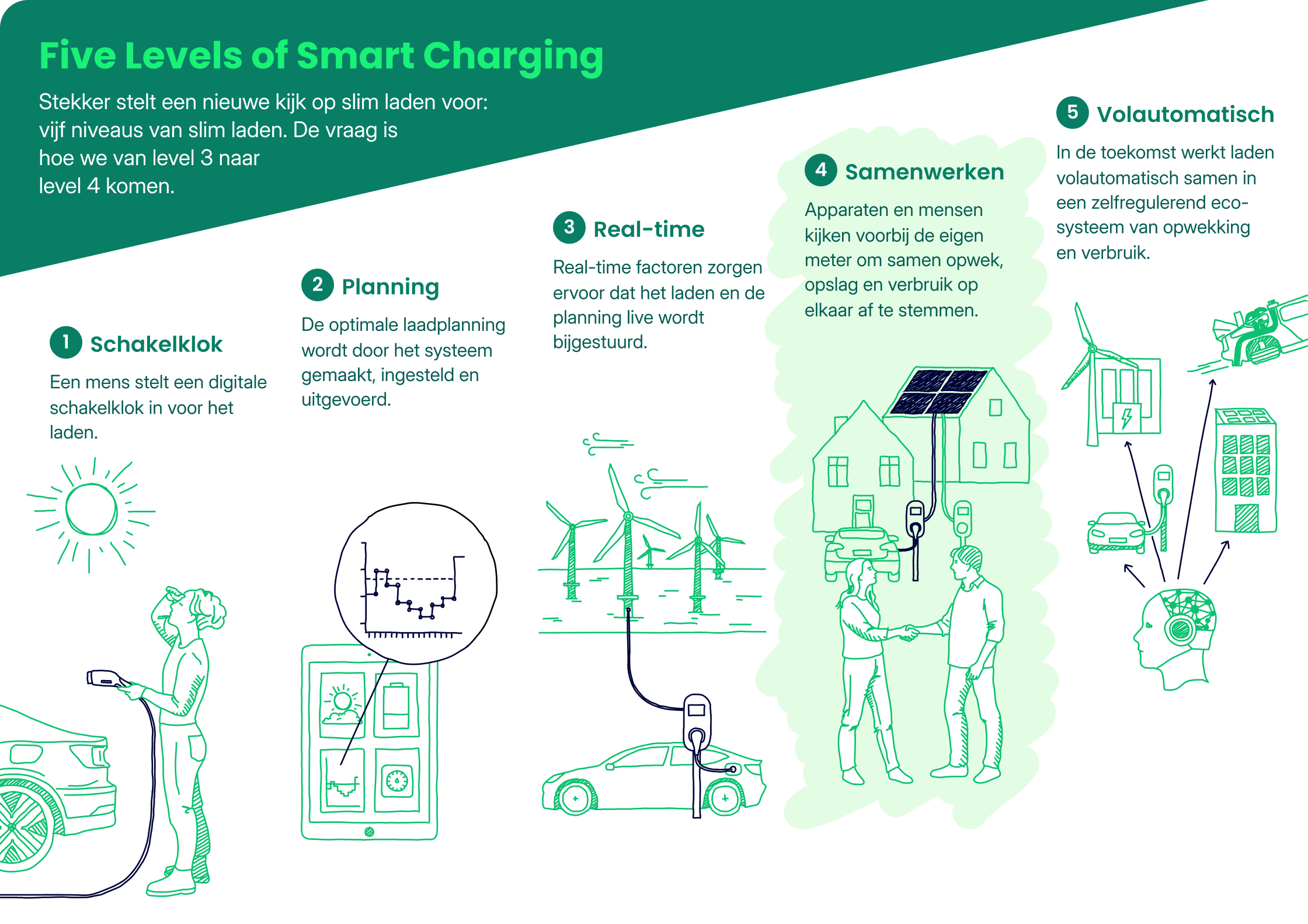
Level 1: Manual timer
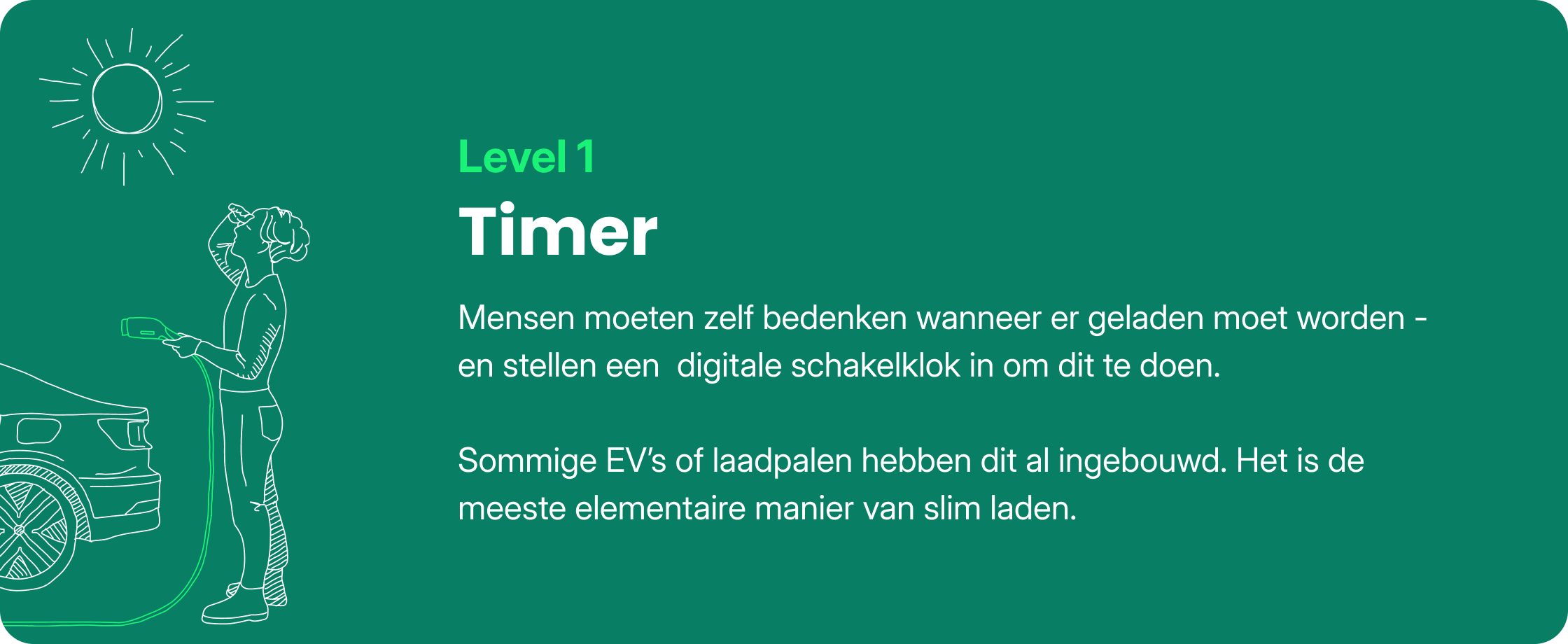
At the first level of smart charging, people — as opposed to computers — do the mental and physical work. People manually set a timer and tell a car or charger to start charging at 10:00 AM, for example to make optimal use of solar panels.
The advantage of level 1 charging is that it’s a low-barrier option to be slightly smarter about energy consumption. But manually plugging in or setting up a car, app or charger is not a scalable automated solution for a large group of people.
Level 2: Planning
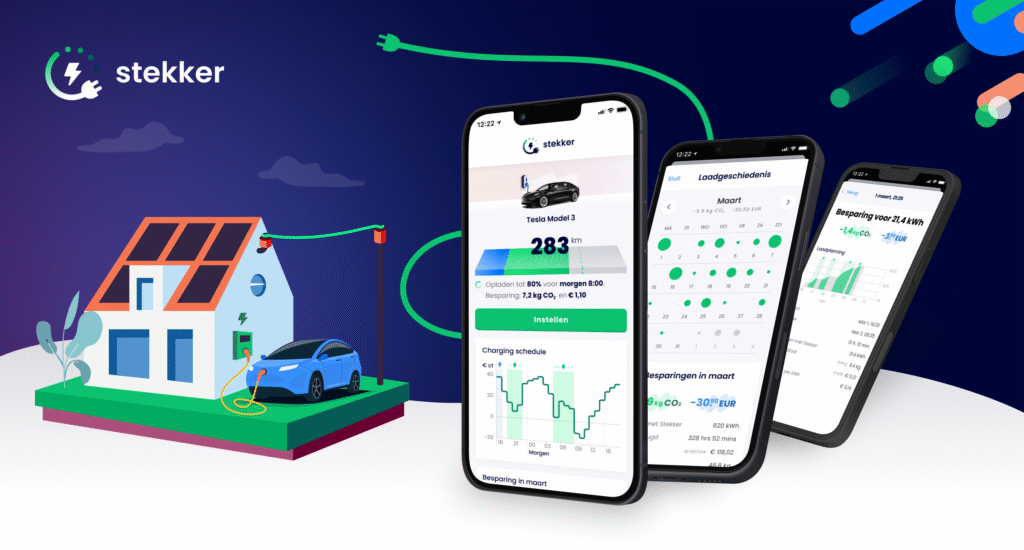
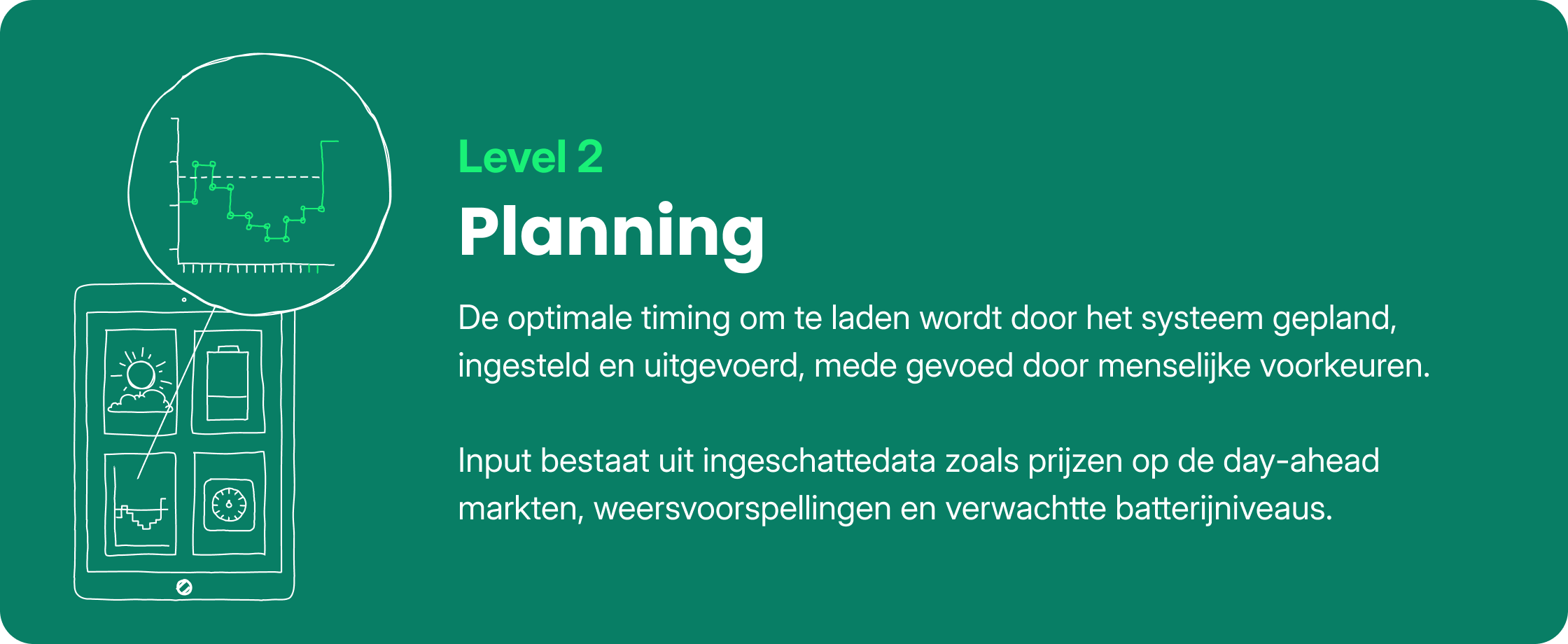
At the second level, computers take over the start and end times of charging — looking at day-ahead market data or estimating behavior and energy patterns.
Several apps and experiments have emerged around level 2 in recent years. Their limitations are clear too: the power grid has been increasingly strained, requiring more frequent real-time adjustments. At critical moments, level 2 is not yet sufficient.
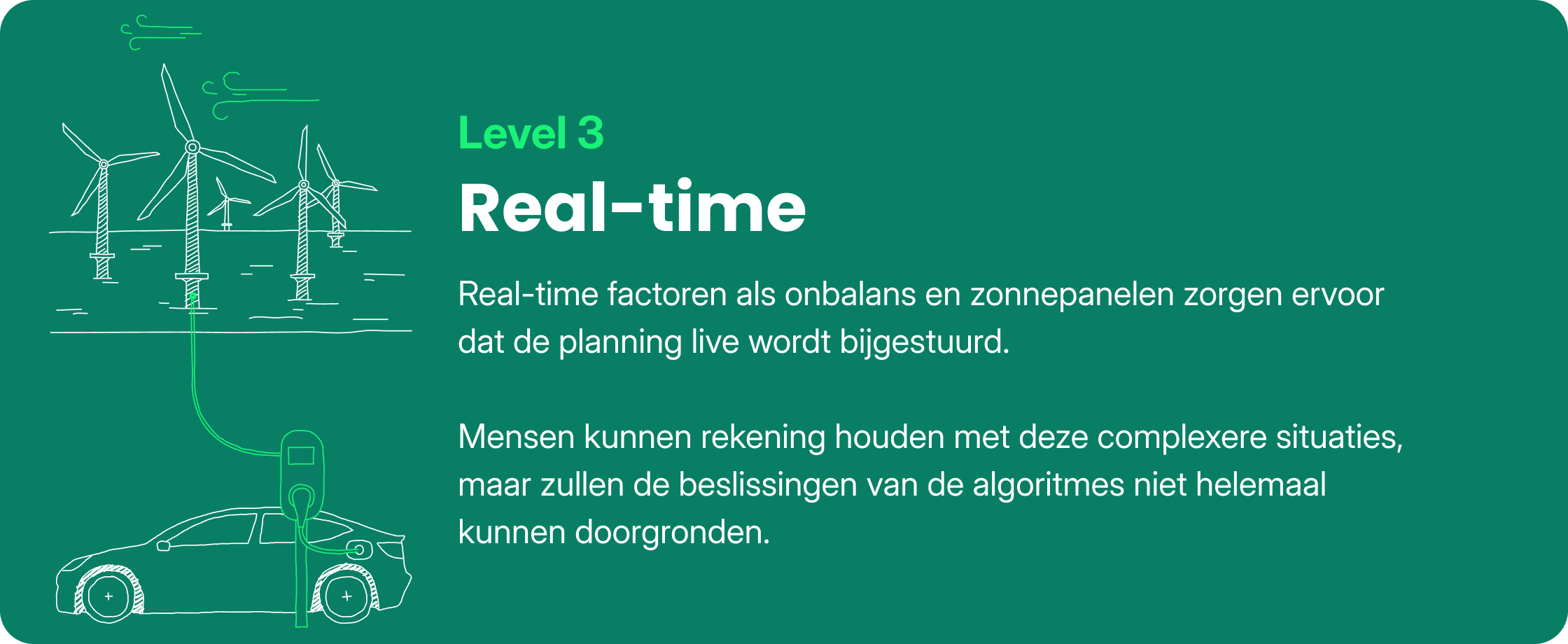
Level 3: Real-Time
At level 3, charging can be adjusted in real time. If the limits of a connection don’t allow it or the power grid has a specific real-time requirement, charging can be adapted accordingly.
There have been recent initiatives around smart charging that aim to steer in real time, for example based on imbalance. This reveals new challenges.
Because what happens when all connections perform the same action based on the same data? Then these sudden switches create new peaks on the grid.
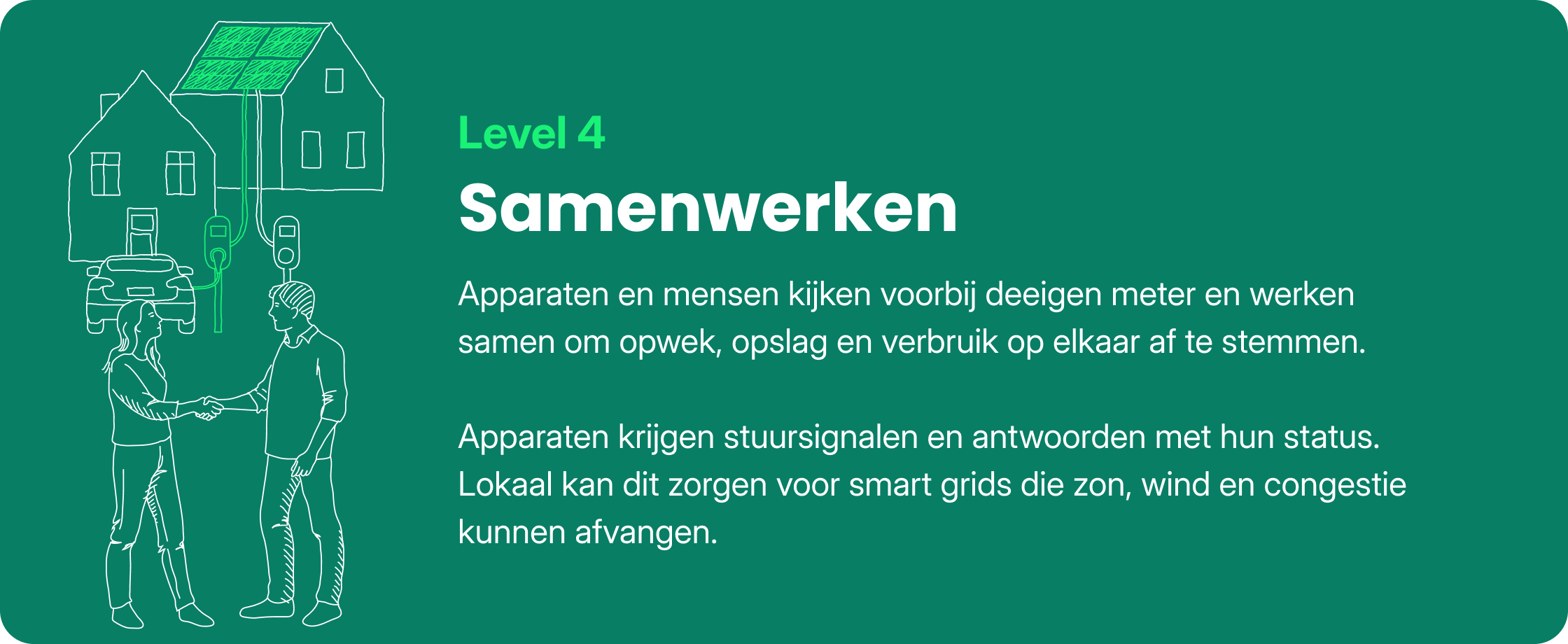
Level 4: Cooperation
At level 4, people once again play a major role — aligning different technologies, interests and incentives so that smart charging can lead to self-regulating smart grids, especially at the local level.
The biggest power consumers on the grid are computers, machines, heating, and increasingly electric vehicles. At level four, all the interests involved in balancing risks, finances and rights are properly aligned.
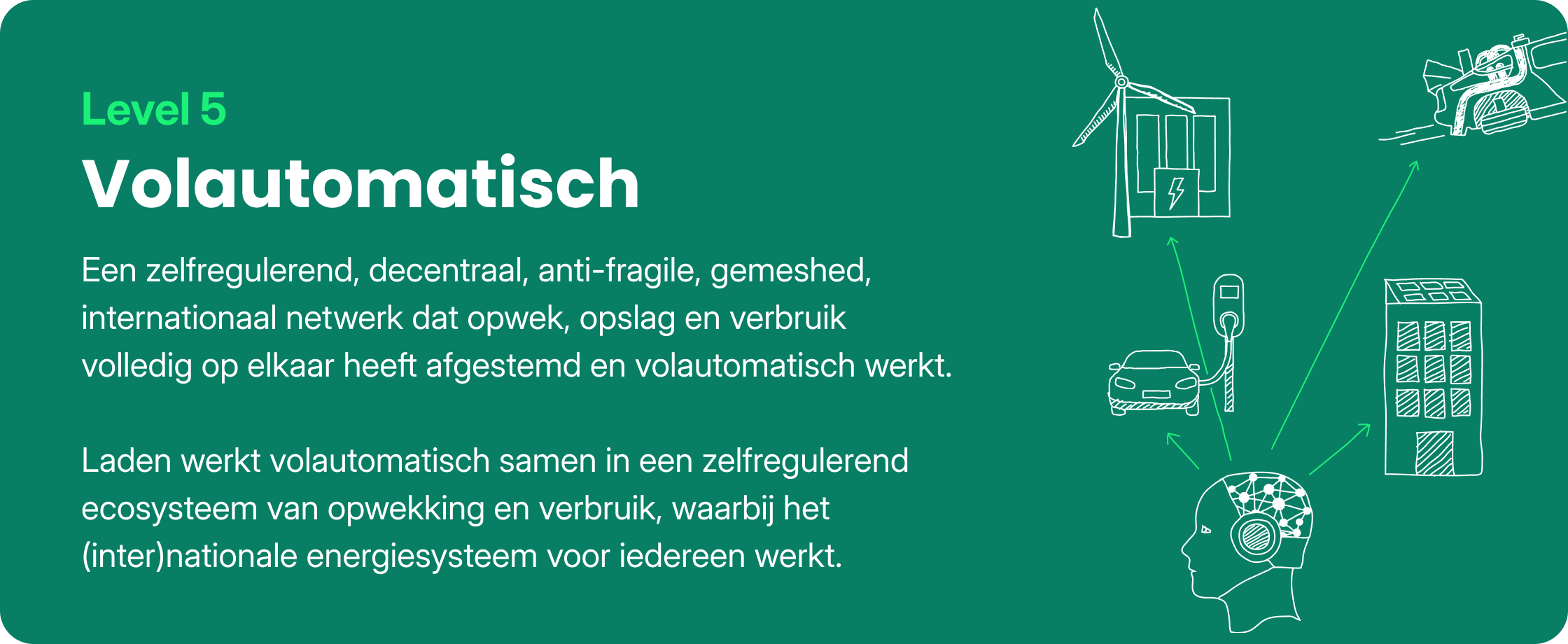
Level 5: An autonomous system
At level 5, smart charging works fully automatically in a self-regulating ecosystem of generation and consumption.
In general terms, level 5 describes a self-regulating, decentralized, anti-fragile, meshed, international network where generation, storage and consumption are fully coordinated.
This level will only be realized in the (distant) future, and is currently difficult to describe technically. By the time we approach level 5, so much new technology will have crystallized that it concerns a reality that is hard to envision today.
Stekker has described these five levels extensively in a whitepaper titled ‘Five Levels of Smart Charging’. This whitepaper can be downloaded at stekker.com/whitepaper