
TenneT recently published a press release in which it reports that it has allocated the first time-duration-bound transport rights on the Dutch high-voltage grid. This is an important new development in the Dutch energy landscape, allowing flexibility to be traded for faster access to the power grid.
The new type of contract introduces flexibility into the energy system: companies can get connected faster, but in return they agree to only use electricity at certain times of the day. This can for example be interesting for companies that mainly produce during the day and can then use solar energy. Or for charging plazas where cars are mainly charged at night.
How does it work?
With time-duration-bound transport rights, companies can agree with TenneT that they only use electricity during certain hours. For example:
- A company may only consume electricity between 10:00 PM and 6:00 AM
- Or may only use the grid during weekend hours
- Or specifically during hours when there is much solar or wind energy
Outside those agreed hours, the connection is simply not available. But in exchange, companies can get connected much faster than if they would have to wait for a traditional 24/7 connection.
Why is this necessary?
The Netherlands is struggling with a full power grid. The term ‘grid congestion’ is in the news daily. Businesses that want to expand or new residential areas that want to be built often have to wait years before they can be connected to the power grid.
The bottleneck is not always the total amount of electricity, but especially the peak moments. Just like with a highway: there’s no traffic jam at night, but during rush hour all lanes are full.
By having companies use the grid at different times, much more can be transported over the same cables and transformer stations. It’s the same principle as staggered working hours for rush hour traffic.
What does this mean for smart charging?
For companies with charging plazas this can be very interesting. Charging electric vehicles is namely very suitable for flexibilization:
- Cars often stand still for hours and can therefore charge at different times
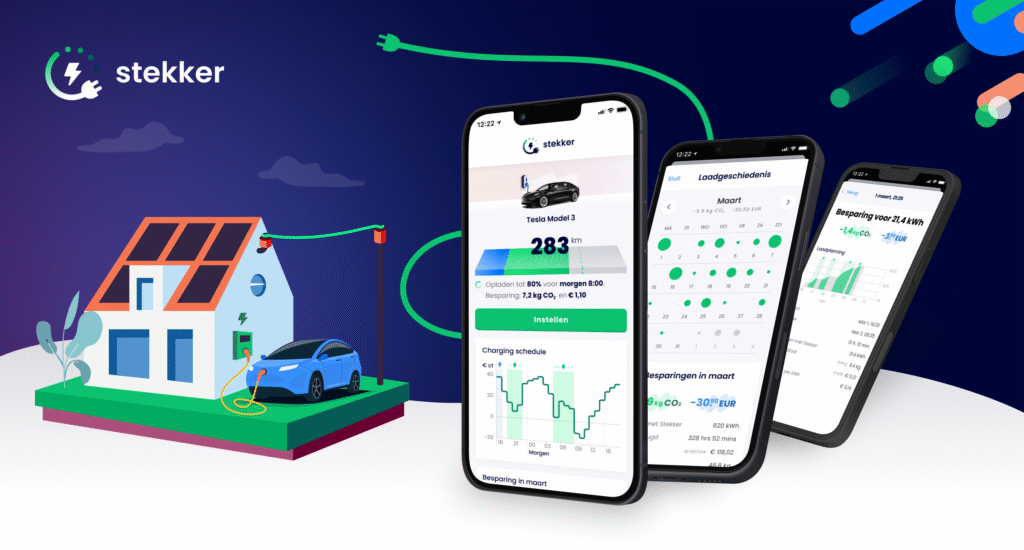
- With smart software like Stekker, charging can automatically take place within the agreed time windows
- Companies can get connected faster and don’t have to wait years for grid reinforcement
Stekker is already ready for these types of contracts. Our software can:
- Automatically respect time windows when charging is and isn’t allowed
- Ensure that all vehicles are still charged in time within the available hours
- Prioritize urgent charging sessions
- Coordinate with other energy consumers on the location
The future
This is just the beginning. TenneT has now allocated the first contracts, but expects this to become a regular part of how the power grid is organized. And not just at TenneT – regional grid operators are also looking at similar constructions.
For companies considering electric transport, it’s good to know that these flexible contracts are coming. With the right software, a time-bound contract doesn’t have to be a limitation, but can actually be an opportunity to get connected faster.
Stekker is ready. Our energy management system is designed for exactly these kinds of flexible scenarios. Whether you have a traditional 24/7 connection or a time-bound contract: we ensure that your vehicles are charged smartly, cheaply and on time.
Want to know more about how Stekker can help with this? Contact us at [email protected]