At Stekker we have worked hard over the past year on Stekker Charging Plaza Management – that’s our software solution for companies that struggle with the consequences of the full power grid and still want the charging stations on their charging plaza to predictably continue charging cars. Quite a challenge in times of grid congestion, but one we were happy to take on. And we’d like to share how we can now control charging sessions within all kinds of constraints.
In this blog post we give a glimpse into our kitchen, where you can see how we can control individual charging stations to get the entire charging plaza under control. Users and administrators can specify their own preferences here. The screenshots on this page come from an admin page of our own, where we can monitor the sessions. We will show more of the front end of the software soon – here mainly a visualization of the control of the charging sessions.
Control charging sessions within a limit
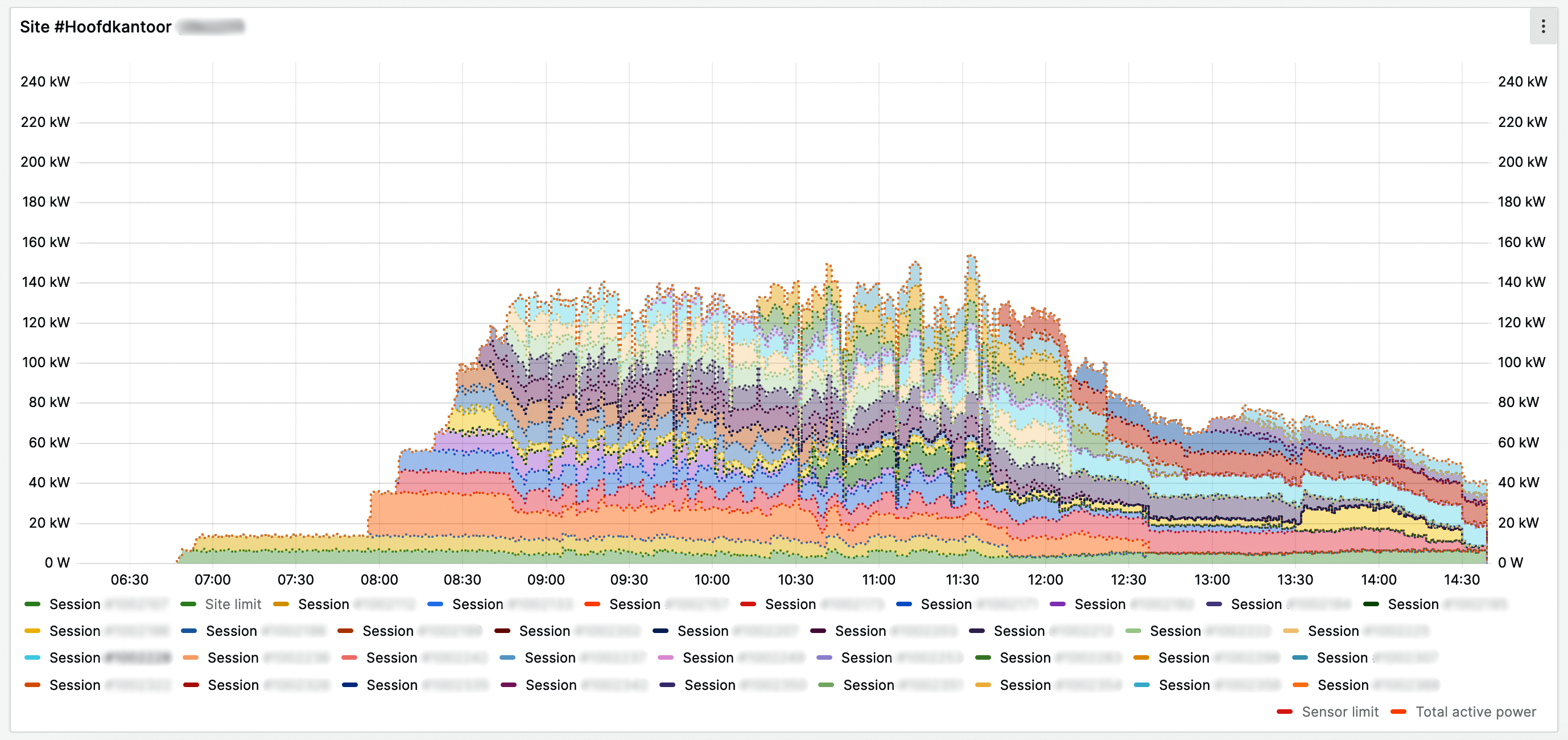
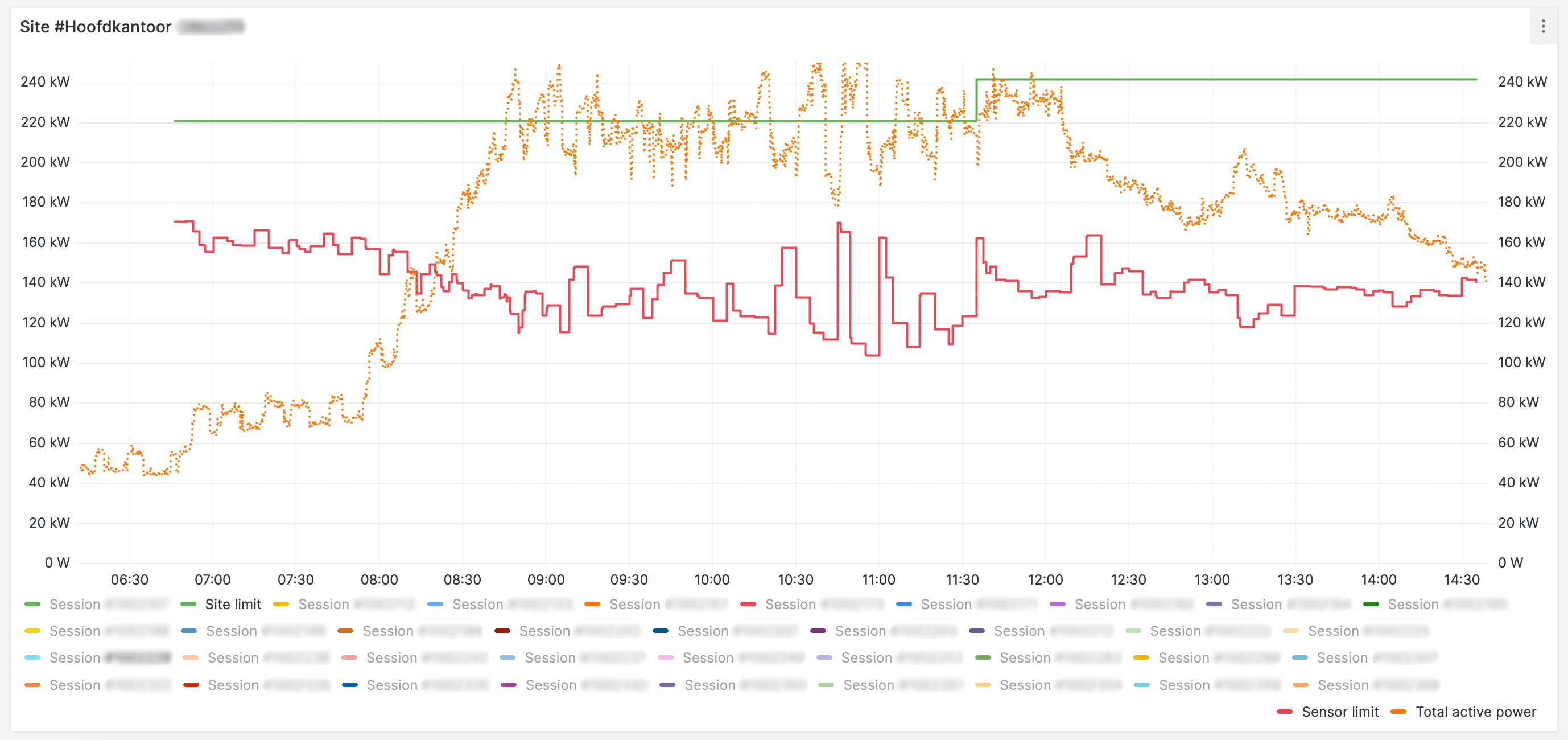
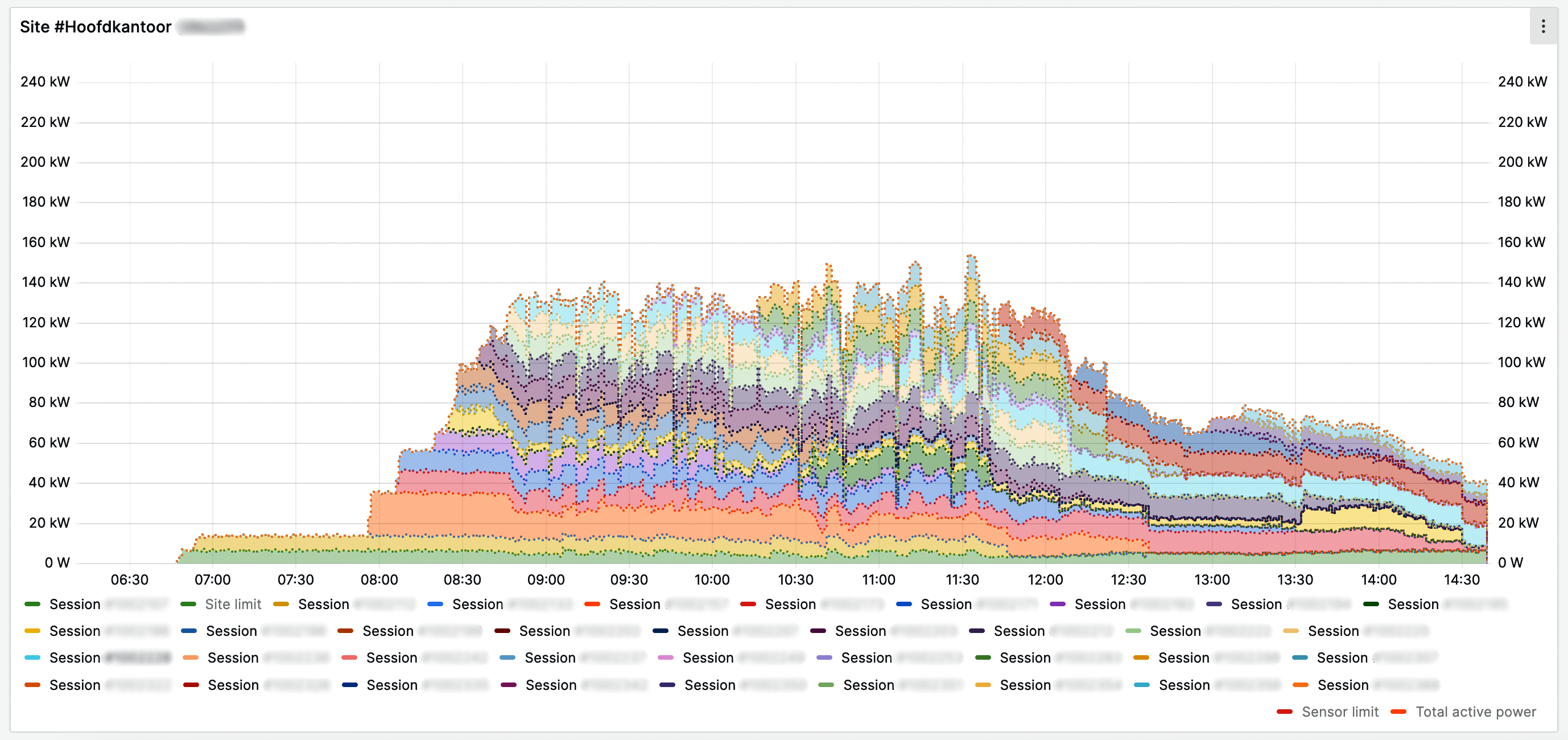
It may seem on the image above as if the total consumption (the orange line) exceeds the maximum limit of the location (the green line). That’s just a shortcoming of this specific visualization at the moment, which uses data that looks back and therefore contains some ‚rounding errors‘. From customer data we can see that the total consumption never goes over the limit. We mainly want to explain the principle of our new technology in this post.
Individually ’squeeze‘ sessions
Our charging plaza management can scale back some charging sessions during the time that little electricity is available. This can differ per vehicle, depending on preferences set by the user or the administrator.
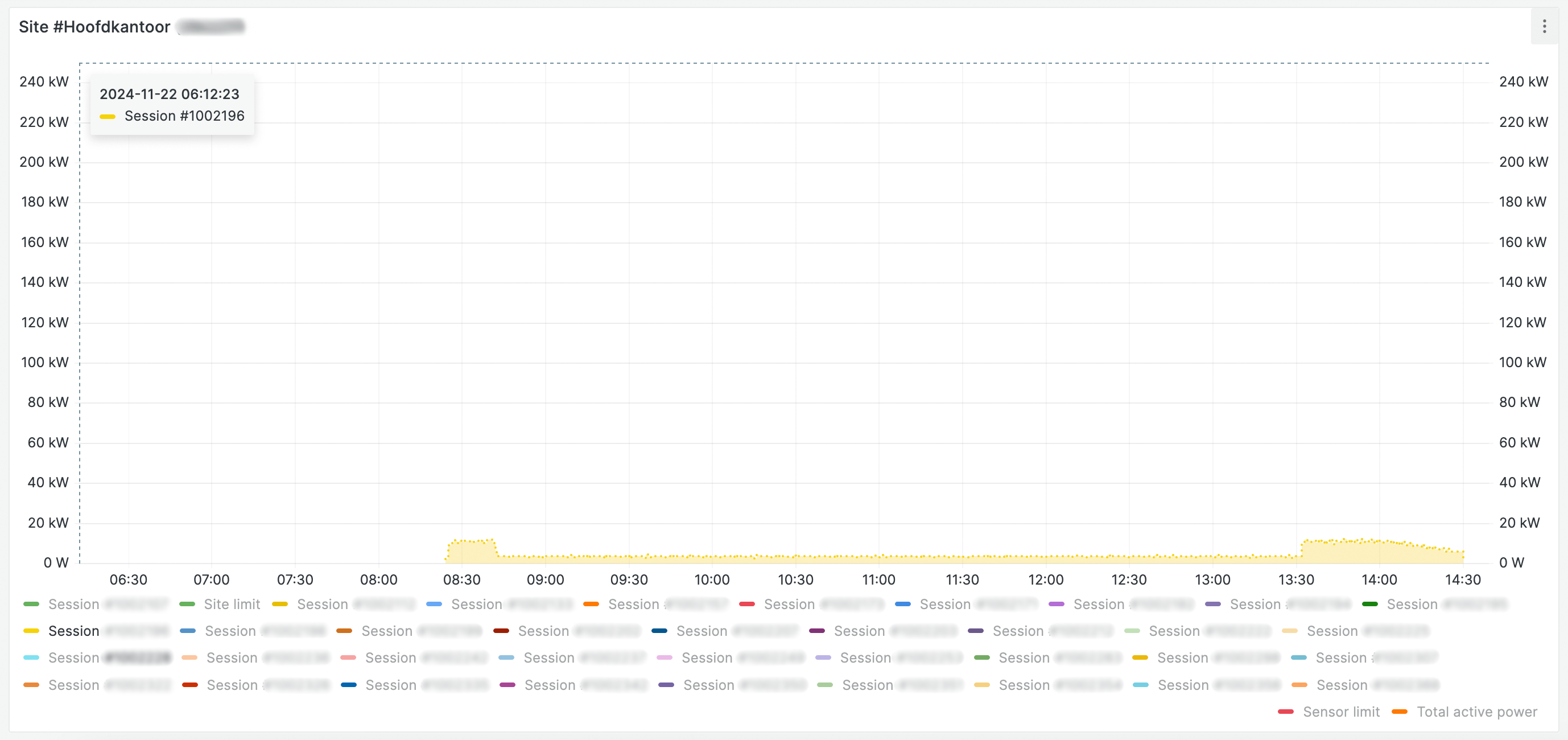
It could well be that this charging station, for example, is set as a ‚guest charging station‘, where visitors can charge – but it goes a bit slower when necessary, so that essential business processes and services such as free charging for guests don’t get in each other’s way.
From 13:30 we see that this session again gets the space to charge at regular speed. Apparently there is then again enough room to also charge vehicles at a low priority at 11kW.
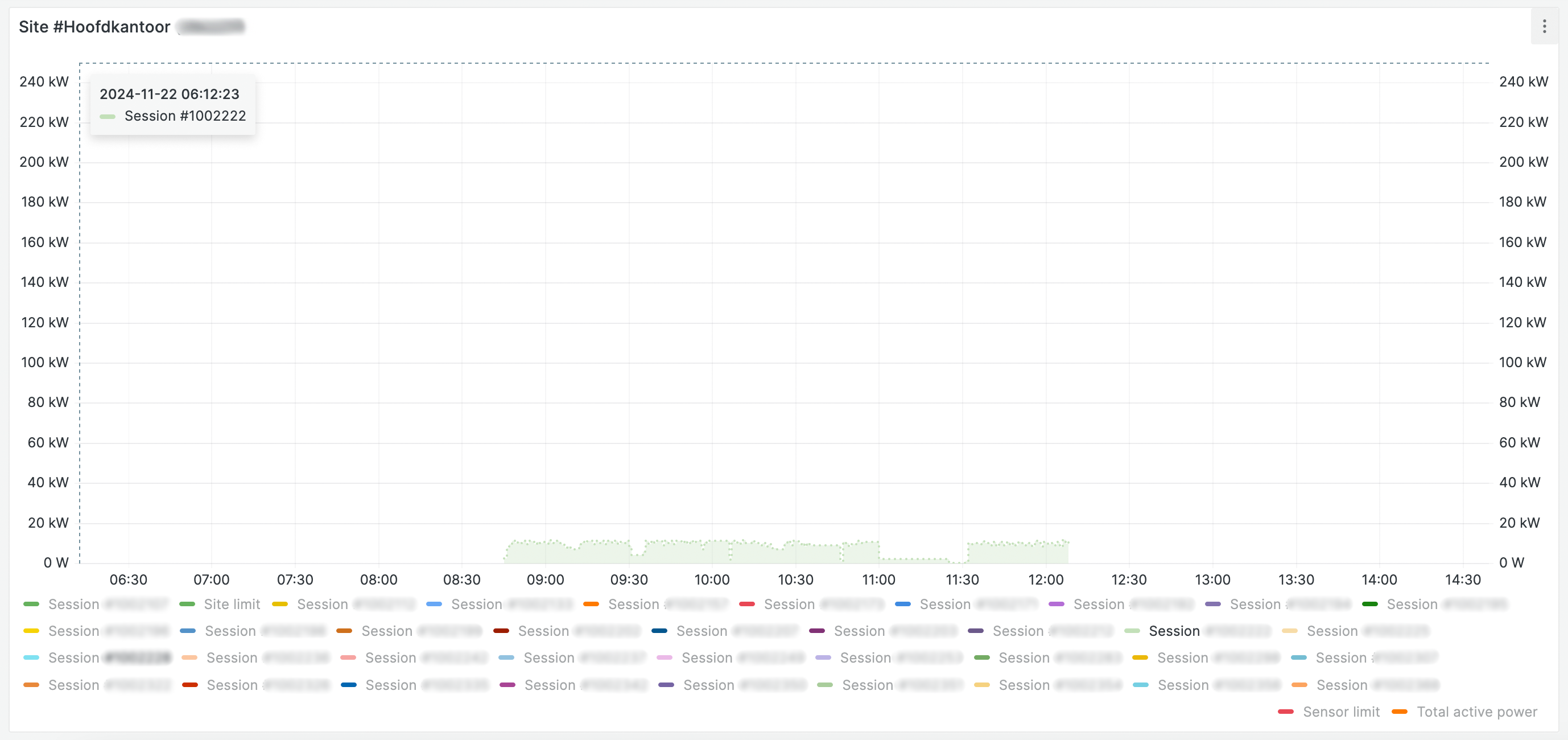
Only around 11:00 we see that this vehicle also has to adapt to the congestion on the local charging plaza. But from lunch there is again enough space to resume charging at regular speed.
Available limits
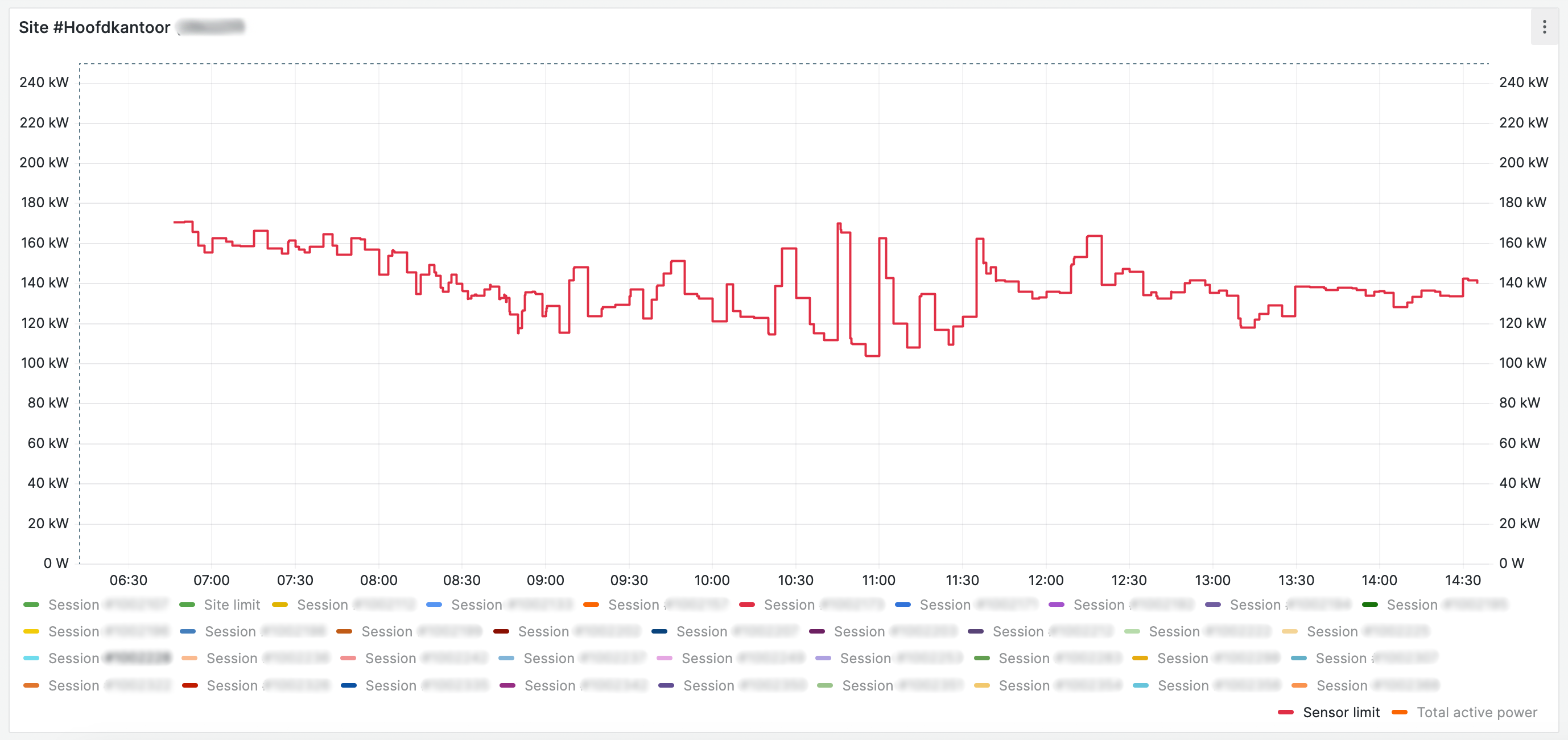
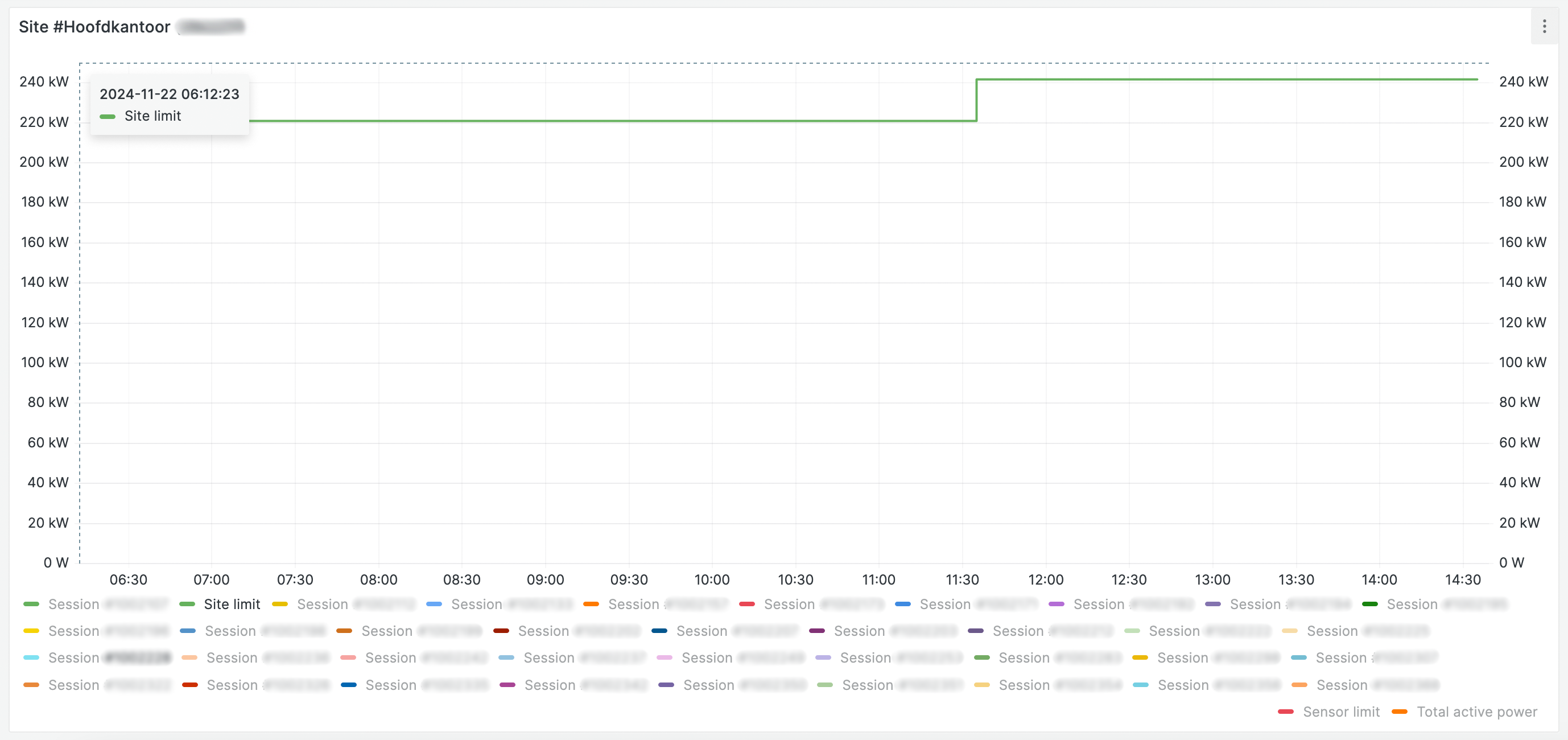
Stekker is ready with Charging Plaza Management to control large numbers of vehicles within different types of limits and constraints. We show that in these two images.
This was just a preview of what we are currently working on at Stekker. Interested or have questions about our charging plaza management and curious what it can mean for your location? Contact [email protected] for more information.