Wouldn’t it be nice if you could use electricity when it’s cheapest and cleanest? And that you actually don’t have to do much for it?
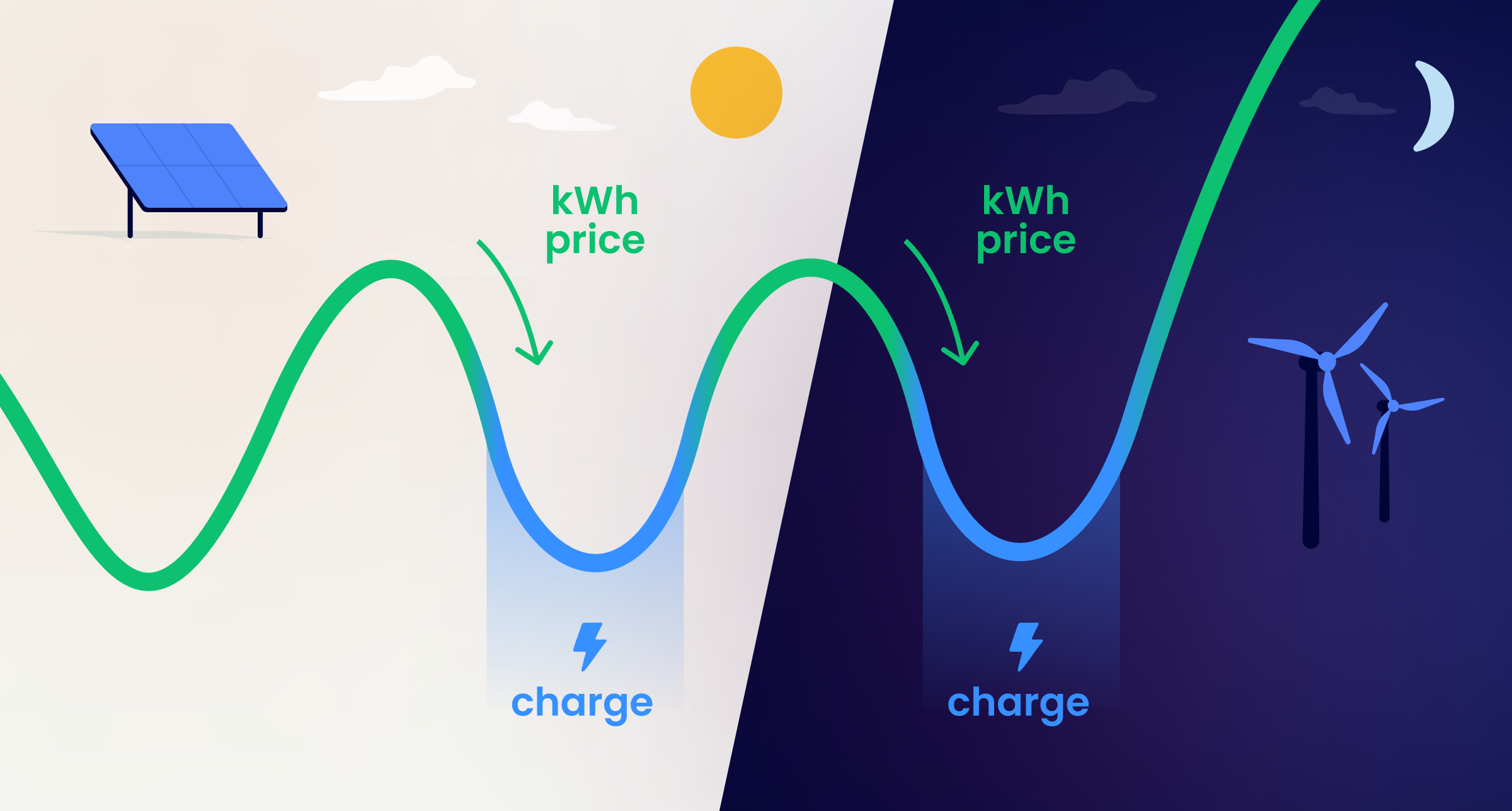
That’s possible with a dynamic hourly contract. With a dynamic contract, the price of your energy changes during the day. In peak hours it’s expensive, during a sunny day when everyone is outside it’s cheap, or you even get paid to consume electricity
There is more and more cheap solar and wind energy coming onto the grid. It would be fair if we could take advantage of that. Because imagine having to pay a fixed amount at Christmas for all your energy consumption for the year ahead, estimated in advance. We would find that strange and not fair. Yet that is comparable to what currently happens with a fixed energy contract, where you pay a fixed price each year for the energy you consume. You are protected in this way against huge fluctuations in the markets – such as during war or recession. That’s the advantage of a fixed contract.
The advantages
But with a dynamic energy contract you do get a form of control in return: you can choose to use mainly sustainable electricity at times when it’s windy or the sun shines. You can charge your car at the lowest rates or have your dryer turn on (or turn it on yourself) at times when it’s most advantageous.
If you have a contract with dynamic hourly tariffs, you can achieve great advantages and save a lot of money.
And moreover, smart use of electricity through software and algorithms reduces costs for everyone, opens the grid to more renewable energy and reduces our dependence on fossil fuels.
What to watch out for
The electricity price is calculated per hour
The gas price is calculated per day
The costs
With a dynamic energy contract, only the delivery costs are dynamic. This means that you still just pay tax on the kWh you use.
Energy prices are made up of different components:
– delivery costs (per kWh & per m3),
– energy taxes
– grid operator costs (fixed costs)
The energy taxes and grid operator costs are the same for fixed, variable and dynamic energy contracts.
The monthly fixed costs and the variable surcharge per kWh and m3 differ per supplier.
Other costs, such as energy tax & VAT are the same for a dynamic contract as for a fixed or variable energy contract. You just have to pay those.