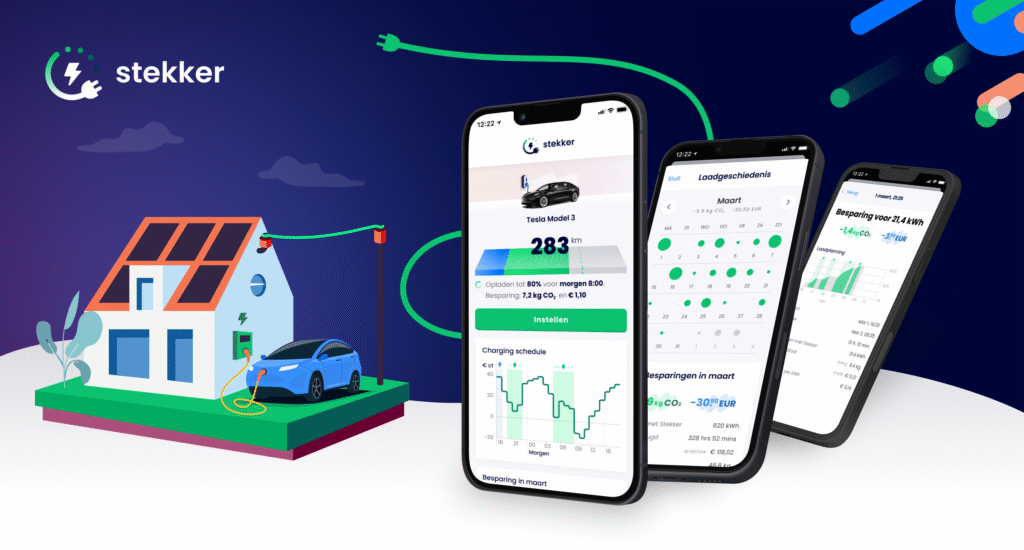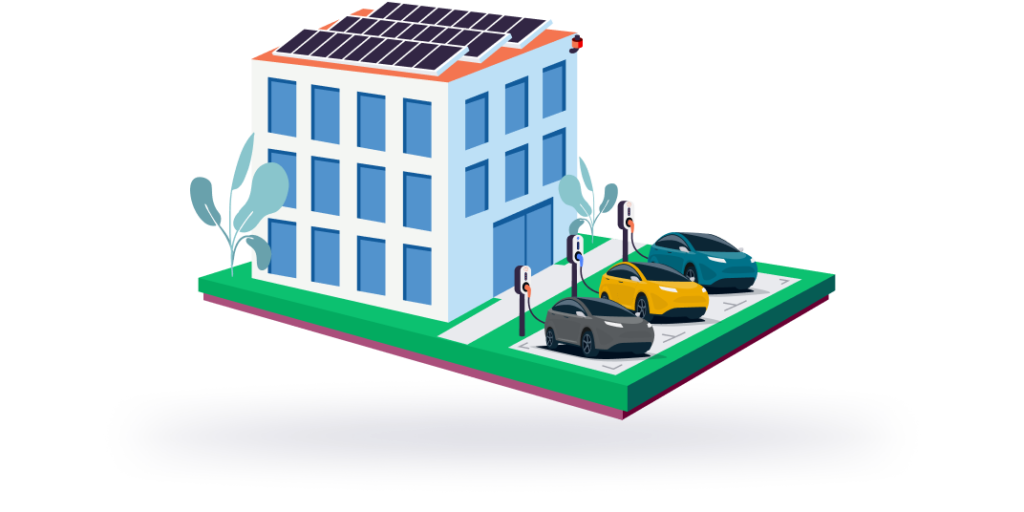

With smart charging of vehicles, you try to charge as much as possible when the sun shines or the wind blows. The advantage is then not only that the electricity is generated cleanly, it usually also means that the electricity is then a lot cheaper. Lately, the electricity grid has been so busy that smart solutions are being sought to store that sustainable energy, such as in the batteries of electric cars.
That’s not easy. The wind can be less strong than predicted, a cloud can easily come in front of the sun: knowing exactly when which vehicle should charge is a very specific puzzle that we at Stekker try to solve.
Machine learning
With AI we can go through large amounts of data and extract a probability calculation with great certainty. This way we can increasingly predict what the weather will do tomorrow, how much electricity will be available, and how things will go in the short term with supply and demand on the electricity grid.
In this blog we want to take you through these developments – and explain in which ways we at Stekker want to use AI to deliver better charging schedules.
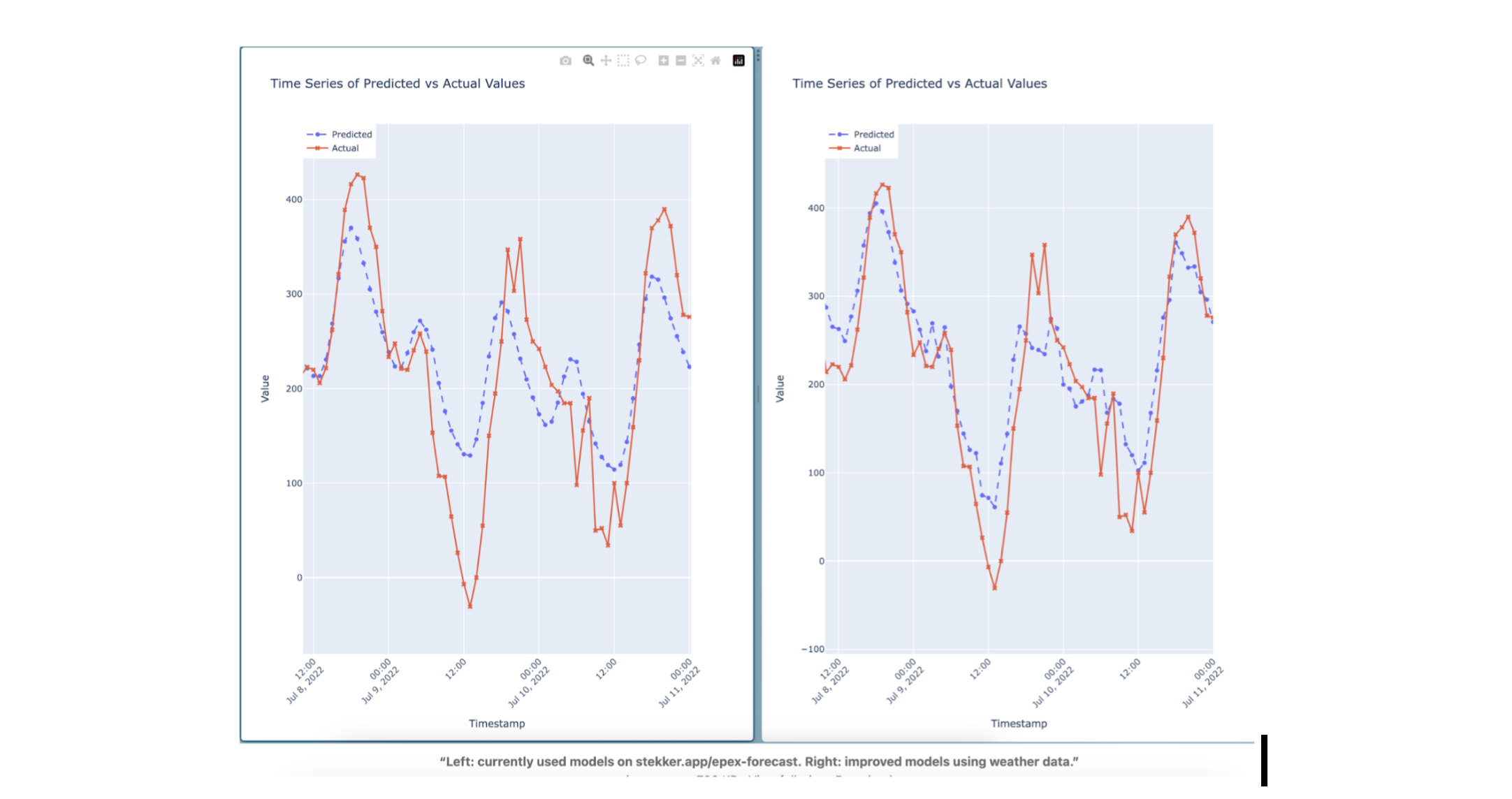
Predict tomorrow’s electricity well based on the weather
The better Stekker can predict what the electricity situation will be like tomorrow, the better we can smart charge. That’s why we are working on making our algorithm make better use of weather forecasts. Because the earlier we know whether the sun will shine or the wind will blow tomorrow, the better the charging schedule will ultimately be.
Determine charging level
One of the problems we at Stekker deal with is that it is sometimes unclear how full a vehicle’s battery is. Cars often don’t tell this when we connect with them, this is usually limited by the car manufacturer.
That’s a problem. Because suppose a car only has 10% and wants to charge to 90%, then we need to be able to schedule the difference well. For that 80% difference that then needs to be charged, the Stekker app can make an extensive charging schedule, which might take half a day to be smart charged.
But if we at Stekker don’t know how full the car is, then it becomes complicated. Suppose it’s already 60% full and needs to go to 90%, then a completely different schedule follows than when the car is plugged into the charger almost empty. And that’s quite a challenge.
Thanks to AI, we can try to look at how full cars generally are at the time of day and location of charging. That’s not an ideal situation, but it could help solve this challenge.
Imbalance
The electricity grid must always be almost perfectly balanced: production of electricity must be equal to the consumption of electricity, otherwise the grid becomes unstable, the voltage rises, and numerous problems arise. Therefore, an update is given every fifteen minutes on how this balance between supply and demand is doing.
At the moment, that data comes live from Tennet. But suppose we had better models available that could better predict the future, then we could set an even sharper charging schedule during charging.
On top of the current weather data and the electricity price, we also want to try forecasting this ‚imbalance‘: see if we can predict when the power grid becomes unstable – and see if we can use charging to help with this. We are still actively looking at whether such a step can help make charging even cleaner and even cheaper.